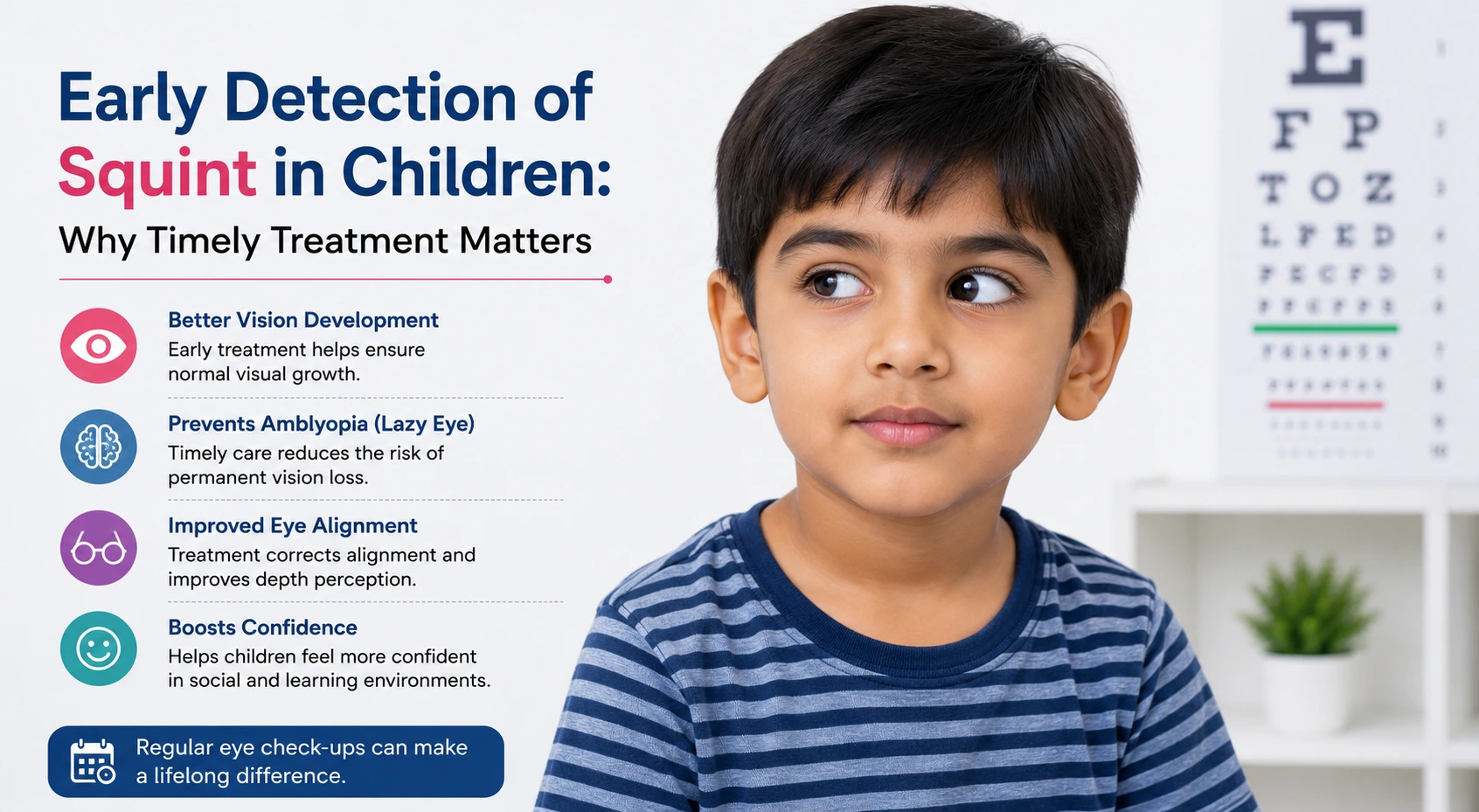
A child’s vision develops rapidly during the early years of life. When the eyes do not align properly, a condition known as squint or strabismus may affect how the brain processes visual information. Although occasional eye misalignment can occur in infants, persistent or noticeable squint should be evaluated by an eye specialist.
Early detection is important because some forms of squint can interfere with normal vision development. Timely diagnosis and appropriate treatment can help improve eye alignment, visual function, and the child’s confidence.
At Axis Eye Clinic, Dr. Ramesh Murthy provides comprehensive eye evaluations to help identify and manage childhood eye conditions.
Squint can be constant or may appear only occasionally. It can also affect one eye or alternate between both eyes.
Parents who notice persistent misalignment should not wait for the condition to disappear on its own. An early examination can determine the cause and whether treatment is necessary.
Over time, this can contribute to reduced vision in the affected eye, known as amblyopia or lazy eye.
Parents looking for the Best Eye Specialist in Pune should consider experience in evaluating children’s eye alignment and vision development.
One eye turning inward or outward
Eyes appearing misaligned in photographs
Frequent squinting
Tilting or turning the head to see clearly
Closing one eye in bright sunlight
Difficulty focusing on nearby or distant objects
Frequent eye rubbing
Complaints of double vision in older children
A child may not always complain about poor vision, which is why regular eye examinations are valuable.
An Eye Clinic Near Me search may be a useful starting point, but parents should prioritize a clinic that offers appropriate pediatric eye evaluation and treatment.
Infants with an obvious or persistent squint should also be assessed promptly, particularly when the misalignment is constant.
These assessments help create an individualized treatment plan.
Parents searching for a Best Squint Surgeon in Pune should focus on specialist experience, proper diagnosis, and a personalized treatment approach rather than choosing a provider based solely on online rankings.
Only an eye examination can determine whether observation is appropriate or whether treatment is required.
Delaying evaluation may allow associated vision problems to continue unnoticed.
Scheduling age-appropriate eye examinations
Following prescribed glasses or treatment plans
Monitoring changes in eye alignment
Encouraging children to report vision difficulties
Attending recommended follow-up appointments
Avoiding unproven home treatments
Parents who are specifically looking for a squint eye specialist in pune should seek an evaluation if their child’s eyes appear persistently misaligned.
Under the guidance of Dr. Ramesh Murthy, parents can receive professional advice about diagnosis, treatment options, and appropriate follow-up.
The clinic’s approach emphasizes accurate evaluation and age-appropriate care rather than using the same treatment plan for every child.
For adults requiring cataract treatment, selecting an experienced specialist is important. Patients researching the Best Cataract Surgeon in Pune should evaluate qualifications, experience, diagnostic facilities, surgical techniques, and post-operative care.
Recognizing warning signs, arranging timely eye examinations, and following the recommended treatment plan can make a meaningful difference. Whether the child needs glasses, amblyopia management, monitoring, or surgical treatment, the appropriate approach depends on a professional assessment.
If you notice persistent eye misalignment or changes in your child’s vision, consider scheduling a comprehensive evaluation at Axis Eye Clinic with Dr. Ramesh Murthy.
Early detection is important because some forms of squint can interfere with normal vision development. Timely diagnosis and appropriate treatment can help improve eye alignment, visual function, and the child’s confidence.
At Axis Eye Clinic, Dr. Ramesh Murthy provides comprehensive eye evaluations to help identify and manage childhood eye conditions.
What Is Squint in Children?
Squint, medically called strabismus, occurs when both eyes do not point in the same direction at the same time. One eye may turn inward, outward, upward, or downward while the other eye looks straight ahead.Squint can be constant or may appear only occasionally. It can also affect one eye or alternate between both eyes.
Parents who notice persistent misalignment should not wait for the condition to disappear on its own. An early examination can determine the cause and whether treatment is necessary.
Why Early Detection of Squint Matters
Supports Normal Vision Development
During childhood, the brain learns to combine information from both eyes to create clear and coordinated vision. If one eye is consistently misaligned, the brain may begin relying more heavily on the better-aligned eye.Over time, this can contribute to reduced vision in the affected eye, known as amblyopia or lazy eye.
Helps Prevent Long-Term Vision Problems
Early assessment allows an ophthalmologist to identify vision problems before they become more difficult to manage. Treatment may include glasses, patching, exercises in selected cases, or surgical correction depending on the child’s condition.Parents looking for the Best Eye Specialist in Pune should consider experience in evaluating children’s eye alignment and vision development.
Common Signs of Squint in Children
Parents and caregivers should watch for:One eye turning inward or outward
Eyes appearing misaligned in photographs
Frequent squinting
Tilting or turning the head to see clearly
Closing one eye in bright sunlight
Difficulty focusing on nearby or distant objects
Frequent eye rubbing
Complaints of double vision in older children
A child may not always complain about poor vision, which is why regular eye examinations are valuable.
What Causes Squint in Children?
Squint can have several possible causes.Refractive Errors
Significant differences in the focusing power of the two eyes can sometimes contribute to eye misalignment.Poor Vision in One Eye
Conditions that reduce vision in one eye may affect how both eyes work together.Problems With Eye Muscles or Nerves
The muscles and nerves responsible for eye movement must work together precisely. Problems affecting their coordination can result in strabismus.Other Childhood Eye Conditions
Certain eye diseases or developmental conditions may also be associated with squint. A complete examination is therefore important rather than assuming the cause based only on appearance.When Should Parents Take a Child for an Eye Examination?
Parents should arrange an eye examination if they notice persistent eye misalignment, unusual head positioning, difficulty seeing, or other changes in visual behavior.An Eye Clinic Near Me search may be a useful starting point, but parents should prioritize a clinic that offers appropriate pediatric eye evaluation and treatment.
Infants with an obvious or persistent squint should also be assessed promptly, particularly when the misalignment is constant.
How Is Childhood Squint Diagnosed?
An ophthalmologist may perform several assessments depending on the child’s age and symptoms.Visual Acuity Testing
The doctor checks how clearly each eye can see.Eye Alignment Assessment
Different tests help determine how the eyes move and work together.Refraction
The child’s focusing power is evaluated to identify whether glasses may be required.Detailed Eye Examination
The doctor examines the internal and external structures of the eyes to rule out other conditions.These assessments help create an individualized treatment plan.
Treatment Options for Squint
Treatment depends on the child’s age, type of squint, severity, and underlying cause.Prescription Glasses
If refractive errors contribute to the squint, appropriately prescribed glasses may improve alignment and vision.Eye Patching
Patching the stronger eye may be recommended in certain children with amblyopia to encourage the weaker eye to develop better visual function.Vision Therapy or Exercises
Selected patients may benefit from specific exercises designed to improve visual coordination. These should only be performed when recommended by an eye-care professional.Squint Surgery
Some children may require surgery to adjust the position or function of specific eye muscles. Surgery is considered based on the individual diagnosis and is not necessary for every child.Parents searching for a Best Squint Surgeon in Pune should focus on specialist experience, proper diagnosis, and a personalized treatment approach rather than choosing a provider based solely on online rankings.
Can Squint Correct Itself?
Some forms of eye misalignment in very young infants may resolve as the visual system develops. However, persistent squint should not simply be ignored.Only an eye examination can determine whether observation is appropriate or whether treatment is required.
Delaying evaluation may allow associated vision problems to continue unnoticed.
How Parents Can Support Their Child’s Eye Health
Parents can contribute to healthy vision development by:Scheduling age-appropriate eye examinations
Following prescribed glasses or treatment plans
Monitoring changes in eye alignment
Encouraging children to report vision difficulties
Attending recommended follow-up appointments
Avoiding unproven home treatments
Parents who are specifically looking for a squint eye specialist in pune should seek an evaluation if their child’s eyes appear persistently misaligned.
Why Choose Axis Eye Clinic for Children’s Eye Care?
Axis Eye Clinic focuses on comprehensive eye evaluation and individualized treatment. A detailed assessment helps determine whether a child’s squint is related to refractive error, amblyopia, eye muscle coordination, or another condition.Under the guidance of Dr. Ramesh Murthy, parents can receive professional advice about diagnosis, treatment options, and appropriate follow-up.
The clinic’s approach emphasizes accurate evaluation and age-appropriate care rather than using the same treatment plan for every child.
What About Cataracts and Children’s Vision?
Although squint is different from cataract, children with other eye conditions may require specialized ophthalmic care. Cataracts can affect vision when the normally clear lens of the eye becomes cloudy.For adults requiring cataract treatment, selecting an experienced specialist is important. Patients researching the Best Cataract Surgeon in Pune should evaluate qualifications, experience, diagnostic facilities, surgical techniques, and post-operative care.
People Also Ask: FAQs
Q1. At what age should a child be checked for squint?
Children with noticeable or persistent eye misalignment should be evaluated promptly. Routine vision screening is also important during childhood.Q2. Is squint in children serious?
Squint may affect normal visual development if left untreated. The seriousness depends on its cause, type, and severity.Q3. Can glasses correct squint?
Glasses can improve or correct some types of squint, particularly when refractive errors contribute to the misalignment.Q4. Does every child with squint need surgery?
No. Treatment depends on the specific condition. Some children improve with glasses, patching, or other approaches, while others may require surgery.Q5. Can squint cause lazy eye?
Yes. Persistent misalignment can contribute to amblyopia because the brain may suppress information from the misaligned eye.Q6. Is squint surgery safe for children?
Squint surgery is a commonly performed procedure, but every operation has potential risks. The ophthalmologist will discuss expected benefits, risks, and alternatives before treatment.Q7. When should parents see an eye specialist?
Parents should seek an evaluation if a child’s eye consistently turns, the child tilts their head to see, closes one eye frequently, or experiences visual difficulties.Conclusion
Squint in children should not be considered merely a cosmetic concern. Because childhood is a critical period for visual development, early diagnosis can help identify problems that may affect long-term vision.Recognizing warning signs, arranging timely eye examinations, and following the recommended treatment plan can make a meaningful difference. Whether the child needs glasses, amblyopia management, monitoring, or surgical treatment, the appropriate approach depends on a professional assessment.
If you notice persistent eye misalignment or changes in your child’s vision, consider scheduling a comprehensive evaluation at Axis Eye Clinic with Dr. Ramesh Murthy.