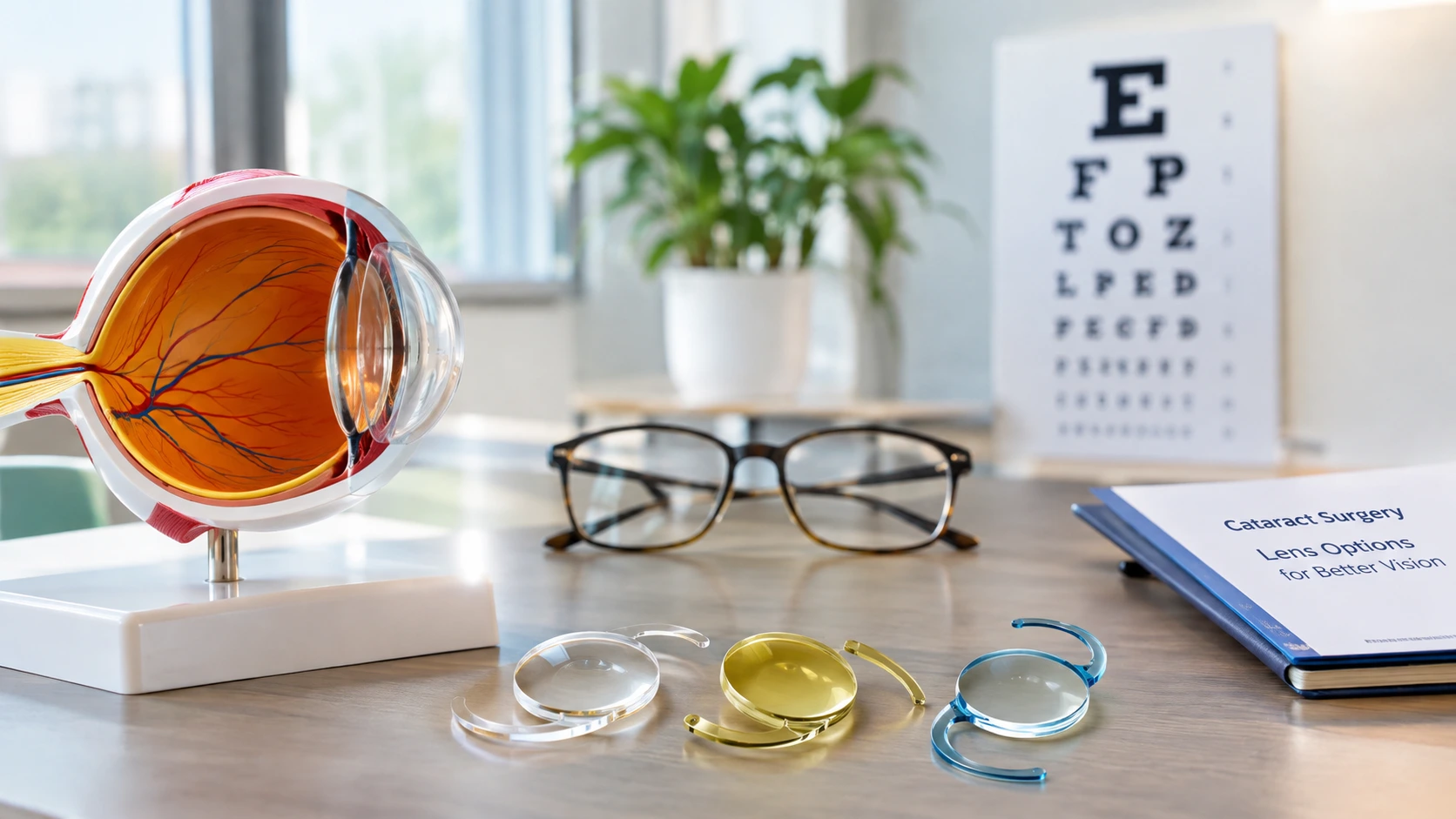
Imagine finally getting cataract surgery, expecting crystal-clear vision, and still finding that streetlights look streaked and text seems slightly smeared. For many patients, the reason is astigmatism, a common focusing problem that quietly influences how cataract surgery should be planned and which artificial lens should be placed inside the eye.
If you have been told you have both a cataract and astigmatism, this guide is for you. Below, we explain how the two conditions interact, why standard lenses may leave you dependent on glasses, what your lens options are, and how to choose the right plan for your eyes. Understanding astigmatism and cataract surgery together is the key to getting the sharpest possible result.
Common symptoms include:
Blurry or ghosted vision, both near and far
Eye strain and headaches after reading or screen work
Difficulty seeing clearly at night, with glare or starburst effects
Squinting to bring objects into focus
Astigmatism is extremely common. Studies suggest that a significant share of people undergoing cataract surgery have a meaningful amount of corneal astigmatism, often enough to affect their final vision if left uncorrected.
Here is where astigmatism matters. A cataract removes the cloudiness, but it does not reshape the cornea. If you have corneal astigmatism before surgery, you will still have it afterwards unless it is deliberately addressed during the procedure. This is why two patients with identical cataracts can have very different visual results depending on how their astigmatism was handled.
Persistent blur at distance despite a successful surgery
A continued need for thick or complex glasses
Double images or shadows around letters
Dissatisfaction despite a technically perfect operation
Even a moderate amount of astigmatism can reduce the sharpness of vision enough to be noticeable in daily life, especially while driving at night or reading fine print.
Corneal topography: Maps the curvature of the cornea in detail.
Keratometry and biometry: Measure corneal power and the length of the eye to calculate the right lens strength.
Optical coherence tomography (OCT): Evaluates the retina and the macula to ensure the eye can support a premium lens.
Dry eye assessment: A poor tear film can distort measurements, so it is treated first when necessary.
Precise measurements help the surgeon decide not only the lens power but also the exact axis, or angle, at which an astigmatism-correcting lens must be aligned.
A toric IOL is designed with different powers in different directions, which counteracts the uneven shape of the cornea. During surgery, the lens is rotated to a precisely calculated angle so that it cancels the astigmatism. For most patients with significant corneal astigmatism, a toric lens offers the best chance of clear distance vision with reduced dependence on glasses.
Toric Extended Depth of Focus and Multifocal Lenses
Patients who also wish to reduce dependence on reading glasses may consider toric versions of extended depth of focus or multifocal lenses. These combine astigmatism correction with improved range of vision, though they require healthy eyes, realistic expectations, and careful counselling about possible halos or glare.
Standard Monofocal Lenses With Glasses
Some patients choose a standard monofocal lens and rely on glasses afterwards. This is a reasonable option for those with very mild astigmatism or those who prefer to avoid the additional cost of a premium lens, as long as they understand that spectacles will likely be needed.
Limbal relaxing incisions: Tiny, carefully placed incisions at the edge of the cornea that gently relax its steeper curve.
Femtosecond laser-assisted arcuate incisions: A laser-guided version of the same principle, offering added precision.
Post-surgery laser vision correction: A touch-up procedure to fine-tune residual astigmatism after the eye has healed.
Customizing the incision location: Placing the main surgical incision on the steepest part of the cornea can slightly reduce astigmatism on its own.
Patients looking for the Best Eye Clinic in Pune often cite this kind of transparent counselling as the deciding factor, since it allows them to make confident decisions instead of feeling pressured into a single option.
Using prescribed antibiotic and anti-inflammatory eye drops on schedule
Avoiding rubbing the eye or lifting heavy objects for the first week
Wearing the protective shield while sleeping, as advised
Attending all follow-up visits so that lens position and healing can be checked
Because toric lenses must stay properly aligned, follow-up checks in the first few days are especially important. For complex or high-astigmatism cases, choosing the Best Eye Specialist in Pune with advanced operating-theatre technology and structured post-operative care can add an extra layer of safety and confidence.
If you have been told you have both a cataract and astigmatism, this guide is for you. Below, we explain how the two conditions interact, why standard lenses may leave you dependent on glasses, what your lens options are, and how to choose the right plan for your eyes. Understanding astigmatism and cataract surgery together is the key to getting the sharpest possible result.
What Is Astigmatism?
Astigmatism occurs when the front surface of the eye, the cornea, or sometimes the natural lens, is shaped more like a rugby ball than a perfectly round cricket ball. Because of this uneven curvature, light entering the eye does not focus on a single point on the retina. Instead, it focuses at two different points, producing blurred or distorted images at every distance.Common symptoms include:
Blurry or ghosted vision, both near and far
Eye strain and headaches after reading or screen work
Difficulty seeing clearly at night, with glare or starburst effects
Squinting to bring objects into focus
Astigmatism is extremely common. Studies suggest that a significant share of people undergoing cataract surgery have a meaningful amount of corneal astigmatism, often enough to affect their final vision if left uncorrected.
How Cataracts and Astigmatism Overlap
A cataract is a clouding of the eye’s natural lens that gradually dulls vision, causes glare, and washes out colors. During cataract surgery, the cloudy lens is removed and replaced with a clear artificial lens called an intraocular lens (IOL).Here is where astigmatism matters. A cataract removes the cloudiness, but it does not reshape the cornea. If you have corneal astigmatism before surgery, you will still have it afterwards unless it is deliberately addressed during the procedure. This is why two patients with identical cataracts can have very different visual results depending on how their astigmatism was handled.
Why Ignoring Astigmatism Can Affect Your Results
Many patients assume that new lenses automatically mean perfect, glasses-free vision. In reality, a standard monofocal IOL corrects only the focusing power of the eye. It does not neutralize the uneven curvature of the cornea. As a result, patients with untreated astigmatism may notice:Persistent blur at distance despite a successful surgery
A continued need for thick or complex glasses
Double images or shadows around letters
Dissatisfaction despite a technically perfect operation
Even a moderate amount of astigmatism can reduce the sharpness of vision enough to be noticeable in daily life, especially while driving at night or reading fine print.
Measuring Astigmatism Before Surgery
Accurate measurement is the foundation of good lens selection. Before surgery, your ophthalmologist will usually perform several tests:Corneal topography: Maps the curvature of the cornea in detail.
Keratometry and biometry: Measure corneal power and the length of the eye to calculate the right lens strength.
Optical coherence tomography (OCT): Evaluates the retina and the macula to ensure the eye can support a premium lens.
Dry eye assessment: A poor tear film can distort measurements, so it is treated first when necessary.
Precise measurements help the surgeon decide not only the lens power but also the exact axis, or angle, at which an astigmatism-correcting lens must be aligned.
Lens Options for Patients With Astigmatism
Toric Intraocular LensesA toric IOL is designed with different powers in different directions, which counteracts the uneven shape of the cornea. During surgery, the lens is rotated to a precisely calculated angle so that it cancels the astigmatism. For most patients with significant corneal astigmatism, a toric lens offers the best chance of clear distance vision with reduced dependence on glasses.
Toric Extended Depth of Focus and Multifocal Lenses
Patients who also wish to reduce dependence on reading glasses may consider toric versions of extended depth of focus or multifocal lenses. These combine astigmatism correction with improved range of vision, though they require healthy eyes, realistic expectations, and careful counselling about possible halos or glare.
Standard Monofocal Lenses With Glasses
Some patients choose a standard monofocal lens and rely on glasses afterwards. This is a reasonable option for those with very mild astigmatism or those who prefer to avoid the additional cost of a premium lens, as long as they understand that spectacles will likely be needed.
Other Ways Surgeons Manage Astigmatism
Lens selection is not the only tool available. Depending on the amount of astigmatism, your surgeon may recommend:Limbal relaxing incisions: Tiny, carefully placed incisions at the edge of the cornea that gently relax its steeper curve.
Femtosecond laser-assisted arcuate incisions: A laser-guided version of the same principle, offering added precision.
Post-surgery laser vision correction: A touch-up procedure to fine-tune residual astigmatism after the eye has healed.
Customizing the incision location: Placing the main surgical incision on the steepest part of the cornea can slightly reduce astigmatism on its own.
Choosing the Right Surgeon Matters
Astigmatism correction demands precision at every step: accurate measurements, careful lens calculation, and perfect alignment inside the eye. A rotation of just a few degrees can reduce the benefit of a toric lens. This is why patients searching for the Best Cataract Surgeon in Pune should look beyond price and focus on experience with toric and premium lenses, access to modern diagnostic equipment, and the willingness to explain their reasoning in plain language.What to Expect at the Clinic
At Axis Eye Clinic, the pathway for patients with cataract and astigmatism typically begins with a detailed assessment, followed by a clear discussion of lens choices, costs, and expected outcomes. Patients are walked through their own scan results so they understand why a particular lens is being recommended.Patients looking for the Best Eye Clinic in Pune often cite this kind of transparent counselling as the deciding factor, since it allows them to make confident decisions instead of feeling pressured into a single option.
Surgery Day and Recovery
Modern cataract surgery is usually a short, day-care procedure performed under topical or local anaesthesia. Most patients go home the same day and resume light activities within a day or two. Typical recovery guidance includes:Using prescribed antibiotic and anti-inflammatory eye drops on schedule
Avoiding rubbing the eye or lifting heavy objects for the first week
Wearing the protective shield while sleeping, as advised
Attending all follow-up visits so that lens position and healing can be checked
Because toric lenses must stay properly aligned, follow-up checks in the first few days are especially important. For complex or high-astigmatism cases, choosing the Best Eye Specialist in Pune with advanced operating-theatre technology and structured post-operative care can add an extra layer of safety and confidence.