What Are Cataracts and How Were They Traditionally Treated?
Cataracts develop when the natural lens of the eye becomes cloudy, causing blurred vision, faded colours, and difficulty performing everyday tasks such as reading or driving at night. Traditional cataract surgery involves making a manual incision in the cornea, breaking up the cloudy lens using ultrasound, and replacing it with an artificial intraocular lens (IOL).While highly successful, earlier techniques sometimes resulted in visual disturbances like glare, halos, or temporary blurriness. Thanks to major advancements in eye care technology, these issues have significantly decreased. Patients visiting the Best Eye Clinic In Pune often seek modern surgical methods that offer improved clarity, greater comfort, and more precise outcomes.
Why Do Some Patients Experience Visual Distortions After Cataract Surgery?
Post-surgery visual distortions can occur for several reasons:Imperfect lens positioning: Even minor misalignment of an IOL can lead to glare or halos.
Pre-existing eye conditions: Astigmatism, dry eye disease, or corneal irregularities may intensify distortions.
Lens choice: Some premium lenses can cause temporary adaptation issues as the brain adjusts to new focusing patterns.
Healing variations: Differences in how the eye heals may affect clarity during the initial weeks.
Proper evaluation and planning by an experienced surgeon—such as Dr. Ramesh Murthy at Axis Eye Clinic—helps reduce these risks significantly. A customized approach ensures the surgical technique and IOL type match the patient’s unique eye structure.
What Modern Techniques Help Reduce Visual Distortions?
Today’s cataract technologies focus heavily on precision, customization, and tissue protection. Some of the most effective advancements include:Digital 3D imaging: Surgeons can map the eye with extreme accuracy, allowing them to position the IOL more precisely.
Advanced IOL materials: New lenses are designed to mimic the eye’s natural focusing ability, reducing glare and improving low-light vision.
Micro-incision techniques: Smaller cuts lower the risk of healing-induced distortions, speeding up visual recovery.
Astigmatism correction during surgery: Surgeons can adjust the corneal shape or use toric lenses to eliminate refractive errors.
These innovations ensure clearer and more stable vision after surgery, dramatically lowering the chances of post-operative disturbances.
How Does the Femtosecond Laser Improve Cataract Surgery?
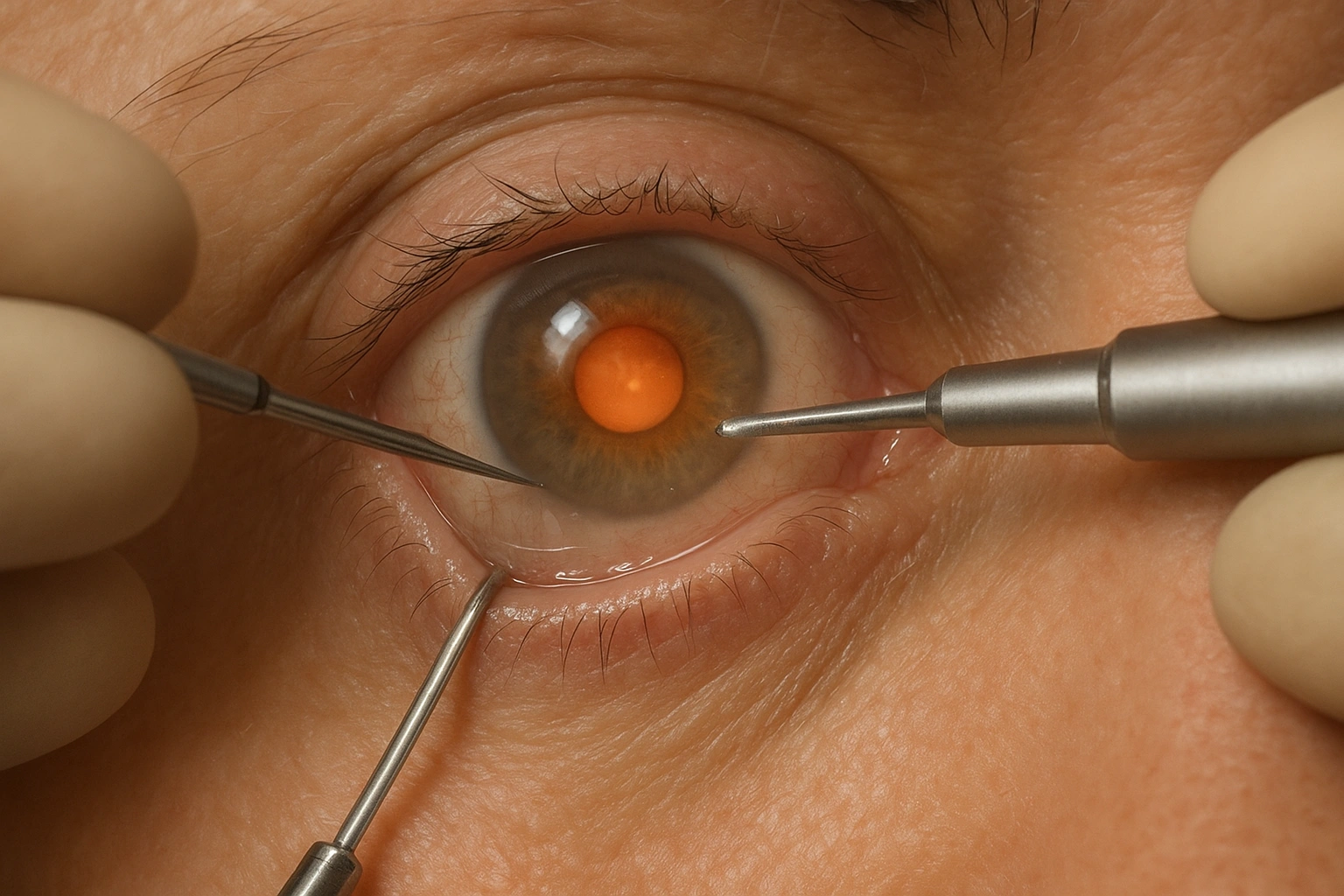
The femtosecond laser represents a major leap forward in cataract treatment. It performs several key steps with exceptional precision:Automated corneal incisions: More accurate and consistent than manual cuts, improving healing and reducing distortion.
Laser-lens fragmentation: It softens the cataract evenly, requiring less ultrasound energy, which minimizes inflammation and speeds healing.
Perfectly sized capsulotomy: The opening made in the lens capsule is more precise, allowing for better IOL positioning.
This technique enhances safety, reduces trauma to the eye, and helps achieve sharper, distortion-free vision. Many patients choose femtosecond laser surgery at Axis Eye Clinic for its reliability and superior outcomes.
What Intraocular Lens (IOL) Options Are Available Today?
Modern IOL options allow surgeons to tailor the procedure to each patient’s lifestyle:Monofocal IOLs: Ideal for clear vision at one distance (usually far), often requiring reading glasses afterward.
Multifocal IOLs: Provide vision at near, intermediate, and far distances, reducing or eliminating the need for spectacles.
Extended Depth of Focus (EDOF) lenses: Offer smooth, continuous vision with fewer halos compared to earlier multifocal designs.
Accommodating lenses: Shift focus naturally within the eye for a more “natural” viewing experience.
Toric lenses: Correct astigmatism, giving patients sharper, more stable vision.
Choosing the right IOL is crucial. An experienced surgeon—often considered the Best Eye Specialist in Pune—can recommend the perfect option based on your work habits, hobbies, and vision expectations.
What Is Recovery Like After Minimally Invasive Cataract Surgery?
Minimally invasive cataract surgery offers one of the quickest recoveries in eye care. Most patients experience significant improvement within the first 24–48 hours. Benefits include:Smaller incisions: Reduce inflammation and speed up the healing process.
Minimal discomfort: Most patients feel only mild irritation or dryness for a short period.
Fast return to routine: Many resume reading, computer work, and even driving within a couple of days.
More stable vision: Modern surgical methods minimize swelling, leading to clearer, sharper sight sooner.
Following post-operative guidance—using medicated drops, avoiding eye rubbing, and attending review visits—ensures long-lasting results with minimal risk of visual distortion.
How Do I Choose the Best Cataract Surgery Option for Me?
Choosing the right cataract procedure involves considering:1. Your age and lifestyle
2. Your desired level of spectacle independence
3. Your eye’s anatomy and any pre-existing conditions
4. The technology and IOLs available at the clinic
5. The surgeon’s expertise
Consulting the Best Cataract Surgeon in Pune allows you to understand the benefits of each technique—from femtosecond laser systems to premium lenses—and choose the option most suited to achieving crisp, distortion-free vision. Patients often search for an Eye Clinic Near Me that offers advanced diagnostics, modern equipment, and a high standard of personalized care.
Where Can I Find a Reliable Center for Cataract Treatment?
When looking for a trusted Cataract Hospital in Pune, consider facilities that offer:Advanced imaging and laser technology
A wide range of premium IOL options
Experienced surgeons with a strong track record
Comprehensive pre- and post-operative care
Patient-friendly services and transparent treatment planning
Under the guidance of Dr. Ramesh Murthy, Axis Eye Clinic is known for combining world-class technology with individualized care, ensuring patients receive the safest and most effective cataract treatment possible.