You had cataract surgery, enjoyed clear vision for months or years, and then it slowly turned hazy again. It is a frustrating experience, but it is also very common, and it is usually easy to fix. The solution is YAG laser capsulotomy, a quick, painless procedure that often restores clear vision within hours to a few days.
This guide explains why vision becomes cloudy after cataract surgery, how YAG laser capsulotomy works, how quickly you can expect to see better, and what to do during recovery.
PCO is not a new cataract and does not mean your surgery failed. It simply means the membrane behind the lens has thickened. Symptoms include:
Gradually blurred or hazy vision
Glare and halos around lights
Reduced contrast and faded colours
Difficulty reading or driving at night
Dilating drops widen your pupil.
Numbing drops are applied, and a special contact lens may be placed on the eye.
The surgeon directs the laser to open the cloudy membrane.
The procedure typically takes five to ten minutes per eye.
Most patients feel nothing more than a light flash and perhaps a slight clicking sound. You can usually go home right away.
Immediately to a few hours: Vision may be blurred from the dilating drops and the bright light of the laser. This usually settles within a few hours.
Within 24 hours: Many patients notice clearer, brighter vision as the haze lifts.
One to three days: Vision generally stabilises, with improved sharpness and contrast.
One to two weeks: Any remaining minor visual disturbances, such as floaters, tend to fade or become less noticeable.
Because the improvement is usually rapid, many people describe it as like cleaning a dirty window. Individual results vary depending on the health of the rest of the eye.
Mild blurring while the pupil remains dilated
A few floaters, which look like small specks or cobwebs
Light sensitivity for a few hours
A mild ache or scratchy feeling, which is uncommon
These effects usually settle on their own. Most patients resume normal activities the same day, though you may prefer someone to accompany you home.
Use any prescribed eye drops exactly as directed
Avoid rubbing your eyes
Wear sunglasses outdoors if light bothers you
Attend your follow-up visit so that eye pressure and the retina can be checked
Contact your doctor promptly if you notice a sudden increase in floaters, flashes of light, or a shadow in your vision
Many patients notice improvement within hours to a day, with vision stabilising over one to three days.
Q2. Is the procedure painful?
No. It is performed with numbing drops, and most patients feel only a light flash.
Q3. Will the cloudiness come back?
Once the membrane is opened, PCO generally does not return in that area.
Q4. Can I drive after the procedure?
Wait until your vision is clear and your pupil has returned to normal, and ideally have someone accompany you home.
Q5. Why do I see floaters afterwards?
Tiny fragments of the membrane may drift in the eye. They usually fade within days to weeks.
This guide explains why vision becomes cloudy after cataract surgery, how YAG laser capsulotomy works, how quickly you can expect to see better, and what to do during recovery.
Why Does Vision Blur Again After Cataract Surgery?
During cataract surgery, the cloudy natural lens is removed and replaced with a clear artificial lens. The new lens sits inside a thin, transparent membrane called the lens capsule. Over time, cells can grow on this membrane and make it cloudy, a condition known as posterior capsular opacification (PCO), sometimes called a “secondary cataract.”PCO is not a new cataract and does not mean your surgery failed. It simply means the membrane behind the lens has thickened. Symptoms include:
Gradually blurred or hazy vision
Glare and halos around lights
Reduced contrast and faded colours
Difficulty reading or driving at night
What Is YAG Laser Capsulotomy?
YAG laser capsulotomy uses a focused laser beam to create a small opening in the cloudy membrane. This opening lets light pass through freely again, so images fall sharply on the retina. The procedure is performed in the clinic, without incisions, and the artificial lens stays exactly where it is.What Happens During the Procedure?
The process is quick and comfortable:Dilating drops widen your pupil.
Numbing drops are applied, and a special contact lens may be placed on the eye.
The surgeon directs the laser to open the cloudy membrane.
The procedure typically takes five to ten minutes per eye.
Most patients feel nothing more than a light flash and perhaps a slight clicking sound. You can usually go home right away.
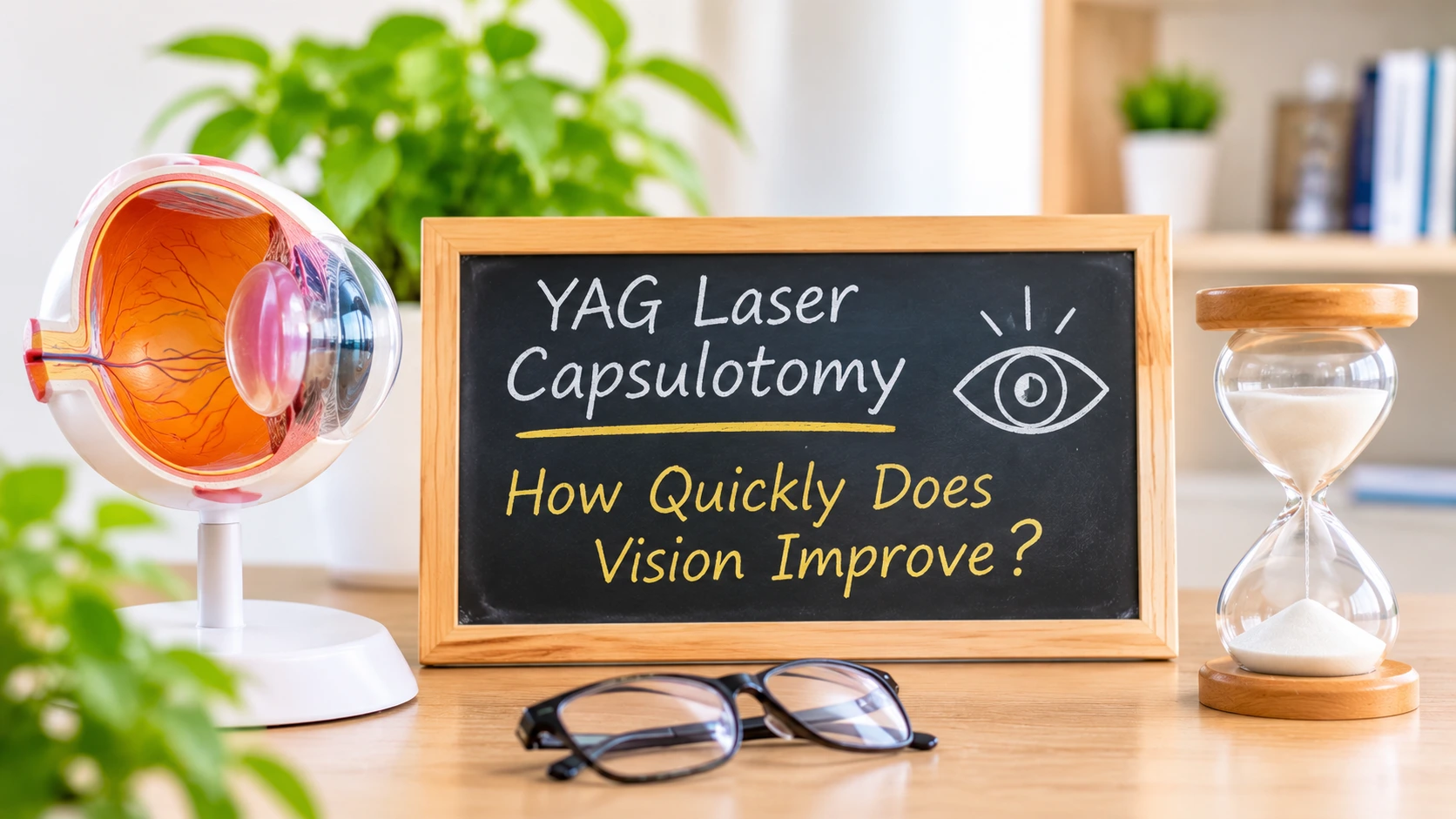
How Quickly Does Vision Improve?
Most patients are pleasantly surprised by how fast the results appear. A typical timeline looks like this:Immediately to a few hours: Vision may be blurred from the dilating drops and the bright light of the laser. This usually settles within a few hours.
Within 24 hours: Many patients notice clearer, brighter vision as the haze lifts.
One to three days: Vision generally stabilises, with improved sharpness and contrast.
One to two weeks: Any remaining minor visual disturbances, such as floaters, tend to fade or become less noticeable.
Because the improvement is usually rapid, many people describe it as like cleaning a dirty window. Individual results vary depending on the health of the rest of the eye.
What to Expect Right After the Procedure
It is normal to experience a few temporary effects:Mild blurring while the pupil remains dilated
A few floaters, which look like small specks or cobwebs
Light sensitivity for a few hours
A mild ache or scratchy feeling, which is uncommon
These effects usually settle on their own. Most patients resume normal activities the same day, though you may prefer someone to accompany you home.
Aftercare Tips for Smooth Recovery
Recovery is simple, but a few precautions help:Use any prescribed eye drops exactly as directed
Avoid rubbing your eyes
Wear sunglasses outdoors if light bothers you
Attend your follow-up visit so that eye pressure and the retina can be checked
Contact your doctor promptly if you notice a sudden increase in floaters, flashes of light, or a shadow in your vision
Are There Any Risks?
YAG laser capsulotomy is considered very safe, but no procedure is entirely risk-free. Possible complications include a temporary rise in eye pressure, new floaters, inflammation, swelling of the retina, or, very rarely, retinal detachment. Your doctor will check your eye pressure after the procedure and review your risk factors beforehand. Once the membrane has been opened, PCO does not come back in the same place, so the treatment is usually permanent.Why Experience Matters
Although YAG laser capsulotomy is short, accuracy is important. The laser must be placed precisely to open the membrane without affecting the lens implant. Patients who want a clear explanation of their results and recovery often look for the Best Cataract Surgeon in Pune, since the same surgeon who understands your original surgery can judge the right timing for laser treatment.Meet the Expert Behind This Guide
This article has been reviewed with clinical input from Dr. Ramesh Murthy, a senior ophthalmologist with extensive experience in cataract surgery and post-cataract care. Often described by patients as the Best Eye Specialist in Pune, Dr. Murthy believes patients should understand their recovery clearly so they never worry about normal healing signs.Care at Our Clinic
At Axis Eye Clinic, patients who return with blurred vision after cataract surgery receive a detailed examination to confirm that PCO is the cause, since other conditions can mimic it. If the laser is needed, the procedure, recovery timeline, and warning signs are explained in plain language. Families looking for the Best Eye Clinic in Pune often value this clarity and the follow-up care that comes with it.Frequently Asked Questions
Q1. How soon will I see better after YAG laser capsulotomy?Many patients notice improvement within hours to a day, with vision stabilising over one to three days.
Q2. Is the procedure painful?
No. It is performed with numbing drops, and most patients feel only a light flash.
Q3. Will the cloudiness come back?
Once the membrane is opened, PCO generally does not return in that area.
Q4. Can I drive after the procedure?
Wait until your vision is clear and your pupil has returned to normal, and ideally have someone accompany you home.
Q5. Why do I see floaters afterwards?
Tiny fragments of the membrane may drift in the eye. They usually fade within days to weeks.