Have you ever sat in an eye clinic, stared into a strange machine that flashed a bright light, and walked out with no idea what just happened to your eyes? You are not alone. Most patients hear the term “eye imaging test” for the first time only when their doctor recommends one, and the lack of clear information often leads to unnecessary anxiety. This guide breaks down exactly what an eye imaging test is, why it is done, what to expect, and how it helps protect your vision for years to come.
Whether you have been told you need a scan for glaucoma, diabetic retinopathy, macular degeneration, or simply as part of a routine check-up, understanding the process will help you feel more confident walking into your appointment. By the end of this article, you will know which test suits which condition, how to prepare, and what your results actually mean.
These tests are painless, quick, and typically completed within 10 to 15 minutes. Dr. Ramesh Murthy often explains to patients that early detection through imaging can be the difference between preserving eyesight and losing it permanently, since many serious eye conditions develop silently.
Regular imaging is especially important if you fall into any of these categories:
•You have diabetes or high blood pressure
•You have a family history of glaucoma or macular degeneration
•You are over the age of 40
•You have had previous eye surgery, including cataract surgery
•You wear high-power spectacles or contact lenses
•You experience sudden flashes, floaters, or vision changes
1.Check-in and history review — The technician or doctor reviews your symptoms and medical history.
2.Pupil dilation (if required) — Eye drops are used to widen the pupil for a clearer view of the retina.
3.Positioning — You rest your chin and forehead against the imaging device to keep your head steady.
4.Image capture — The machine takes rapid, painless images of your eye.
5.Review and consultation — Your doctor reviews the images with you and explains the findings.
At Axis Eye Clinic, patients are guided through every step by trained staff, ensuring the process feels comfortable rather than clinical and intimidating.
If you are searching for the Best Eye Specialist In Pune to help interpret your imaging results accurately, choosing a clinic with advanced diagnostic technology and an experienced team makes a significant difference in the quality and reliability of your diagnosis.
•Diabetics (annual retinal imaging is a standard recommendation)
•Anyone over 40, as a baseline for glaucoma screening
•Patients considering cataract or refractive surgery
•Anyone with a family history of hereditary eye disease
•Patients already diagnosed with an eye condition, for progress monitoring
If you have been putting off a check-up, know that finding the Eye Clinic Near Me with the right imaging equipment is often the simplest first step toward protecting your long-term vision, rather than waiting until symptoms force the issue.
For those specifically dealing with cloudy or blurred vision linked to cataracts, it is worth noting that pre-surgical imaging plays a major role in surgical planning. Patients researching the Best Cataract Surgeon in Pune should ask specifically about the imaging protocols used before and after surgery, since precise measurements directly affect surgical outcomes and lens selection.
Similarly, if you are trying to locate the Best Ophthalmologists Near Me in Pune, look for a clinic that treats imaging as a routine, integrated part of every consultation rather than an optional add-on — this reflects a genuinely thorough approach to eye health.
Don’t leave your vision to chance. Schedule your comprehensive eye imaging test today with Dr. Ramesh Murthy at Axis Eye Clinic, and take a proactive step toward protecting your sight for the years ahead. Call now or visit our website to book your appointment.
Whether you have been told you need a scan for glaucoma, diabetic retinopathy, macular degeneration, or simply as part of a routine check-up, understanding the process will help you feel more confident walking into your appointment. By the end of this article, you will know which test suits which condition, how to prepare, and what your results actually mean.
What Is an Eye Imaging Test?
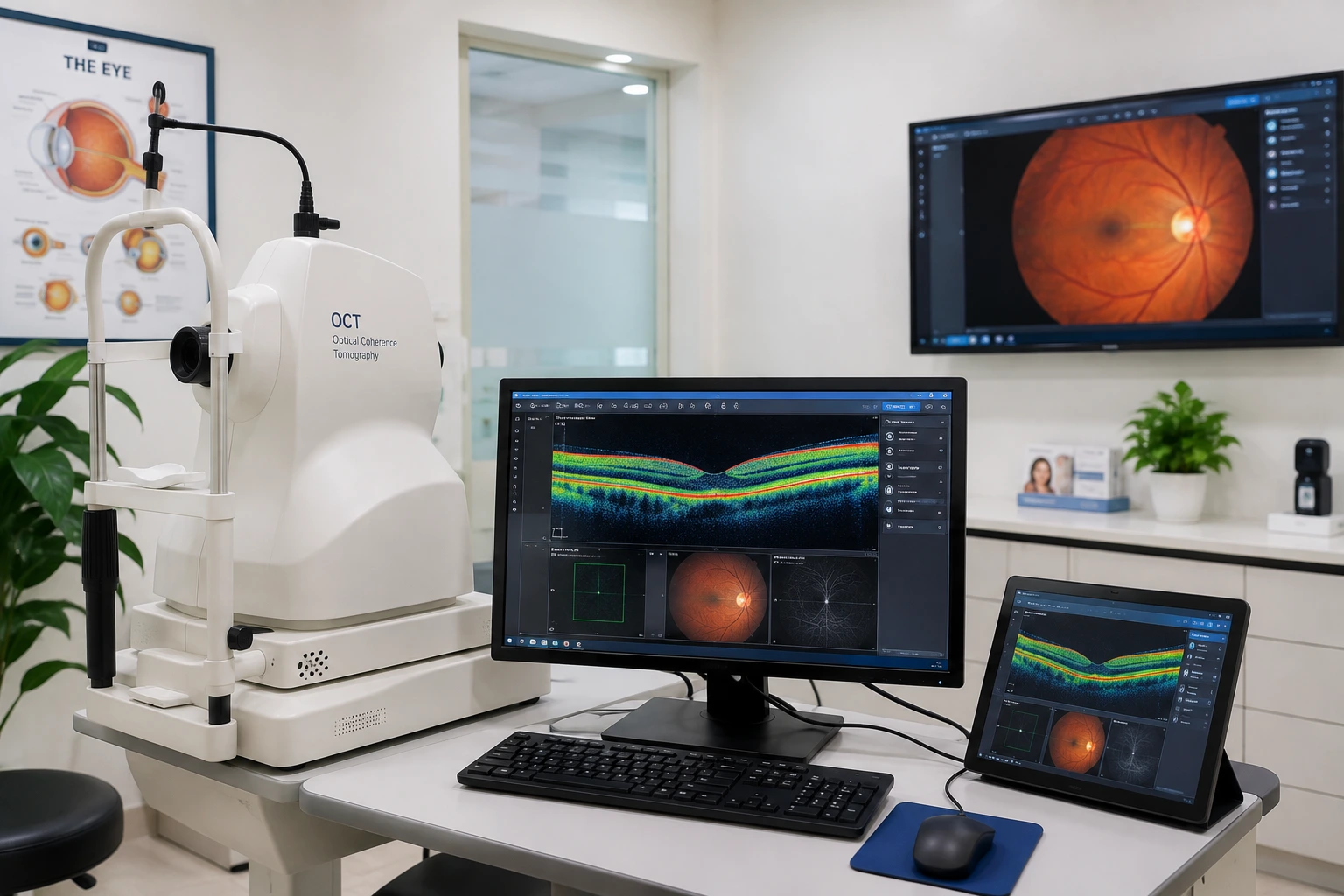
An eye imaging test is a non-invasive diagnostic procedure that captures detailed pictures of the structures inside and around your eye — including the retina, optic nerve, cornea, and blood vessels. Unlike a standard vision check that only measures how well you see, imaging tests reveal what is physically happening inside the eye, often detecting problems long before symptoms appear.These tests are painless, quick, and typically completed within 10 to 15 minutes. Dr. Ramesh Murthy often explains to patients that early detection through imaging can be the difference between preserving eyesight and losing it permanently, since many serious eye conditions develop silently.
Why Are Eye Imaging Tests Important?
Many sight-threatening conditions — such as glaucoma, diabetic retinopathy, and age-related macular degeneration — show no early warning signs. By the time a person notices blurred vision or dark spots, significant and sometimes irreversible damage may have already occurred. Imaging tests act as an early warning system, allowing doctors to catch these issues at a stage when treatment is most effective.Regular imaging is especially important if you fall into any of these categories:
•You have diabetes or high blood pressure
•You have a family history of glaucoma or macular degeneration
•You are over the age of 40
•You have had previous eye surgery, including cataract surgery
•You wear high-power spectacles or contact lenses
•You experience sudden flashes, floaters, or vision changes
Common Types of Eye Imaging Tests
1. Optical Coherence Tomography (OCT)
OCT uses light waves to create cross-sectional, 3D images of the retina and optic nerve. It is considered the gold standard for diagnosing and monitoring glaucoma, macular degeneration, and diabetic eye disease. The scan takes only a few minutes and requires no injections or dilation drops in most cases.2. Fundus Photography
This test captures a detailed photograph of the back of the eye, including the retina, optic disc, and blood vessels. It helps track changes over time and is commonly used to document diabetic retinopathy progression.3. Fluorescein Angiography (FA)
A special dye is injected into the bloodstream, and as it travels through the retinal blood vessels, a camera captures images to detect leakage, blockages, or abnormal vessel growth. This is particularly useful for diagnosing diabetic retinopathy and macular degeneration.4. Corneal Topography
This maps the curvature of the cornea and is essential before procedures like LASIK, contact lens fitting, or diagnosing conditions such as keratoconus.5. Visual Field Test (Perimetry)
While not a photographic scan, this test measures your complete field of vision, helping detect peripheral vision loss commonly associated with glaucoma.6. B-Scan Ultrasonography
Used when the internal structures of the eye cannot be viewed directly (for example, due to cataracts or bleeding), this test uses sound waves to visualize the retina and other internal structures.What to Expect During Your Eye Imaging Test
Most imaging tests do not require special preparation. However, if your test involves pupil dilation, your vision may remain blurry for a few hours afterward, so arranging transport is a good idea. Here is a general step-by-step of what happens:1.Check-in and history review — The technician or doctor reviews your symptoms and medical history.
2.Pupil dilation (if required) — Eye drops are used to widen the pupil for a clearer view of the retina.
3.Positioning — You rest your chin and forehead against the imaging device to keep your head steady.
4.Image capture — The machine takes rapid, painless images of your eye.
5.Review and consultation — Your doctor reviews the images with you and explains the findings.
At Axis Eye Clinic, patients are guided through every step by trained staff, ensuring the process feels comfortable rather than clinical and intimidating.
How to Read Your Eye Imaging Results
Your ophthalmologist will typically explain results in terms of thickness measurements (for conditions like glaucoma, where nerve fiber layer thinning is tracked), the presence of fluid or swelling (common in macular degeneration), or abnormal blood vessel patterns (seen in diabetic retinopathy). It is important not to self-diagnose based on online research — always rely on a qualified specialist to interpret your specific scan, as normal ranges can vary slightly from person to person and machine to machine.If you are searching for the Best Eye Specialist In Pune to help interpret your imaging results accurately, choosing a clinic with advanced diagnostic technology and an experienced team makes a significant difference in the quality and reliability of your diagnosis.
Who Should Get an Eye Imaging Test?
While anyone can benefit from a baseline scan, imaging tests are strongly recommended for:•Diabetics (annual retinal imaging is a standard recommendation)
•Anyone over 40, as a baseline for glaucoma screening
•Patients considering cataract or refractive surgery
•Anyone with a family history of hereditary eye disease
•Patients already diagnosed with an eye condition, for progress monitoring
If you have been putting off a check-up, know that finding the Eye Clinic Near Me with the right imaging equipment is often the simplest first step toward protecting your long-term vision, rather than waiting until symptoms force the issue.
Choosing the Right Eye Care Team
Not all clinics offer the same level of diagnostic precision. When selecting where to go for your imaging test, consider the technology available, the experience of the specialists, and how clearly they communicate your results. Patients frequently ask how to identify the Best Eye Clinic in Pune, and the answer usually comes down to a combination of modern equipment, a qualified team, and a track record of accurate, timely diagnosis.For those specifically dealing with cloudy or blurred vision linked to cataracts, it is worth noting that pre-surgical imaging plays a major role in surgical planning. Patients researching the Best Cataract Surgeon in Pune should ask specifically about the imaging protocols used before and after surgery, since precise measurements directly affect surgical outcomes and lens selection.
Similarly, if you are trying to locate the Best Ophthalmologists Near Me in Pune, look for a clinic that treats imaging as a routine, integrated part of every consultation rather than an optional add-on — this reflects a genuinely thorough approach to eye health.
Frequently Asked Questions
Q1. Is an eye imaging test painful?
No. Eye imaging tests are non-invasive and painless. Most patients feel nothing more than a bright flash of light during the scan.Q2. How long does an eye imaging test take?
Most scans take between 5 and 15 minutes, though your total appointment time may be longer if pupil dilation or multiple tests are needed.Q3. Will my vision be blurry after the test?
Only if your pupils were dilated with drops. This blurriness is temporary and usually resolves within 4 to 6 hours.Q4. How often should I get an eye imaging test?
This depends on your risk factors. Healthy adults may need a baseline scan every 1–2 years, while diabetics or glaucoma patients often require annual or more frequent imaging.Q5. Can eye imaging detect diseases before symptoms appear?
Yes, that is precisely its strength. Conditions like glaucoma and diabetic retinopathy can be detected on a scan well before you notice any vision changes.Q6. Do I need a referral to get an eye imaging test?
Not necessarily. You can visit an eye clinic directly for a comprehensive check-up that includes relevant imaging based on your symptoms and risk profile.Take the Next Step for Your Eye Health
Your eyesight deserves more than a guess. Many serious eye conditions are completely silent in their early stages, and an eye imaging test is one of the most reliable ways to catch problems before they affect your vision permanently. If you are researching the Top Eye Specialist in Pune for a thorough, technology-driven eye evaluation, now is the time to book a consultation rather than wait for symptoms to appear.Don’t leave your vision to chance. Schedule your comprehensive eye imaging test today with Dr. Ramesh Murthy at Axis Eye Clinic, and take a proactive step toward protecting your sight for the years ahead. Call now or visit our website to book your appointment.