Cataract surgery is one of the most commonly performed and safest surgical procedures in modern ophthalmology. Yet, its success depends heavily on what happens before the surgeon ever picks up an instrument. The pre-surgical cataract safety check is a comprehensive evaluation process designed to ensure that a patient is medically fit, that the eye is properly measured, and that the surgical plan is tailored to individual needs. If you’re preparing for cataract surgery, understanding this process can ease your anxiety and help you know exactly what to expect.
We break down every step of the pre-surgical cataract safety check, why each step matters, and how it contributes to a smooth, complication-free surgery.
●Confirm the diagnosis and severity of the cataract
●Rule out other eye conditions that could affect the outcome
●Calculate the correct power of the intraocular lens (IOL)
●Identify any systemic health risks that could complicate anesthesia or healing
●Set realistic expectations for vision recovery
Skipping or rushing this stage can lead to inaccurate lens power selection, unexpected complications, or delayed recovery. This is why leading clinics emphasize a thorough, unhurried evaluation before scheduling surgery.
●Your general medical history, including diabetes, hypertension, and blood clotting disorders
●Any previous eye surgeries or injuries
●Current medications, especially blood thinners
●Known allergies, particularly to anesthetic drops or medications
●Family history of eye diseases such as glaucoma or macular degeneration
This step helps the surgeon anticipate any risk factors and adjust the surgical approach accordingly.
●The clarity and density of the cataract
●The health of the cornea
●The condition of the iris and anterior chamber
●Signs of inflammation or infection
This examination is crucial in confirming that cataract surgery is indeed the right course of action and not another underlying issue.
●The axial length of the eye
●Corneal curvature (keratometry)
●Anterior chamber depth
These measurements are fed into specialized formulas to calculate the exact power of the intraocular lens (IOL) that will replace the cloudy natural lens. Precision here directly determines whether you’ll need glasses after surgery and how sharp your resulting vision will be.
●Blood pressure and blood sugar levels
●Cardiac fitness, especially in elderly patients
●Any active infections
Patients with uncontrolled diabetes or hypertension may be advised to stabilize these conditions before proceeding, as they can increase the risk of complications like delayed healing or infection.
●The type of intraocular lens best suited to their lifestyle (monofocal, multifocal, or toric lenses)
●Expected visual outcomes
●Anesthesia type (usually topical or local)
●Post-operative care instructions
This is the stage where patients can ask questions and voice any concerns about the procedure.
●Confirmation of the correct eye to be operated on
●Verification of the IOL power and type
●Review of fasting instructions, if general sedation is planned
●Final consent form signing
This last safety layer significantly reduces the chances of surgical errors and ensures the patient is fully informed and prepared.
If you’re searching for the Best Eye Clinic in Pune, it’s worth prioritizing centers that emphasize detailed diagnostics over rushed consultations. A safe cataract surgery outcome begins long before the operating table — it begins with an accurate, unhurried safety check.
For those researching the Best Eye Specialist in Pune, look for a doctor who takes time to explain each diagnostic step, answers your questions patiently, and involves you in decisions about lens selection and surgical planning.
●Previous eye reports or prescriptions, if any
●Details of past surgeries or hospitalizations
●Someone to accompany you, since your vision may be blurry after pupil dilation
If you’re looking for the Best Cataract Surgeon in Pune, trust a clinic that combines advanced diagnostic technology with genuine patient care. Whether you’re exploring options as an Eye Clinic Near Me or comparing the Best Ophthalmologists Near Me in Pune, don’t compromise on the quality of your pre-surgical evaluation.
Among the Best Cataract Surgery Doctors in Pune, those who dedicate adequate time to pre-operative assessment consistently deliver better patient satisfaction and visual outcomes. So, before you commit to a surgery date, ensure your chosen clinic follows a rigorous, patient-centered safety protocol.
Ready to schedule your comprehensive cataract evaluation? Book a consultation today and take the first confident step toward clearer vision. If you’ve been searching for a trusted Cataract surgeon near me, our team is here to guide you through every stage — from your first eye check to full post-surgical recovery — with expertise, transparency, and care.
We break down every step of the pre-surgical cataract safety check, why each step matters, and how it contributes to a smooth, complication-free surgery.
Why a Pre-Surgical Safety Check Matters
Many patients assume cataract surgery is a simple, one-visit procedure. While it is quick and minimally invasive, the safety and accuracy of the outcome depend on detailed preparation. A pre-surgical check helps the surgical team:●Confirm the diagnosis and severity of the cataract
●Rule out other eye conditions that could affect the outcome
●Calculate the correct power of the intraocular lens (IOL)
●Identify any systemic health risks that could complicate anesthesia or healing
●Set realistic expectations for vision recovery
Skipping or rushing this stage can lead to inaccurate lens power selection, unexpected complications, or delayed recovery. This is why leading clinics emphasize a thorough, unhurried evaluation before scheduling surgery.
Step 1: Detailed Medical and Ocular History
The process typically begins with a conversation. The ophthalmologist will ask about:●Your general medical history, including diabetes, hypertension, and blood clotting disorders
●Any previous eye surgeries or injuries
●Current medications, especially blood thinners
●Known allergies, particularly to anesthetic drops or medications
●Family history of eye diseases such as glaucoma or macular degeneration
This step helps the surgeon anticipate any risk factors and adjust the surgical approach accordingly.
Step 2: Visual Acuity Testing
A standard eye chart test measures how well you can see at various distances. This establishes a baseline so that post-surgical improvement can be accurately tracked. It also helps determine how much the cataract is currently affecting your daily activities, such as reading, driving, or recognizing faces.Step 3: Slit-Lamp Examination
The slit-lamp is a specialized microscope that allows the doctor to examine the front structures of the eye in magnified detail. During this exam, the surgeon evaluates:●The clarity and density of the cataract
●The health of the cornea
●The condition of the iris and anterior chamber
●Signs of inflammation or infection
This examination is crucial in confirming that cataract surgery is indeed the right course of action and not another underlying issue.
Step 4: Dilated Fundus Examination
Your pupils will be dilated using eye drops so the doctor can examine the retina and optic nerve at the back of the eye. This step is essential to rule out conditions like diabetic retinopathy, retinal detachment, or macular degeneration, all of which could affect the final visual outcome even after a technically perfect cataract surgery.Step 5: Biometry and IOL Power Calculation
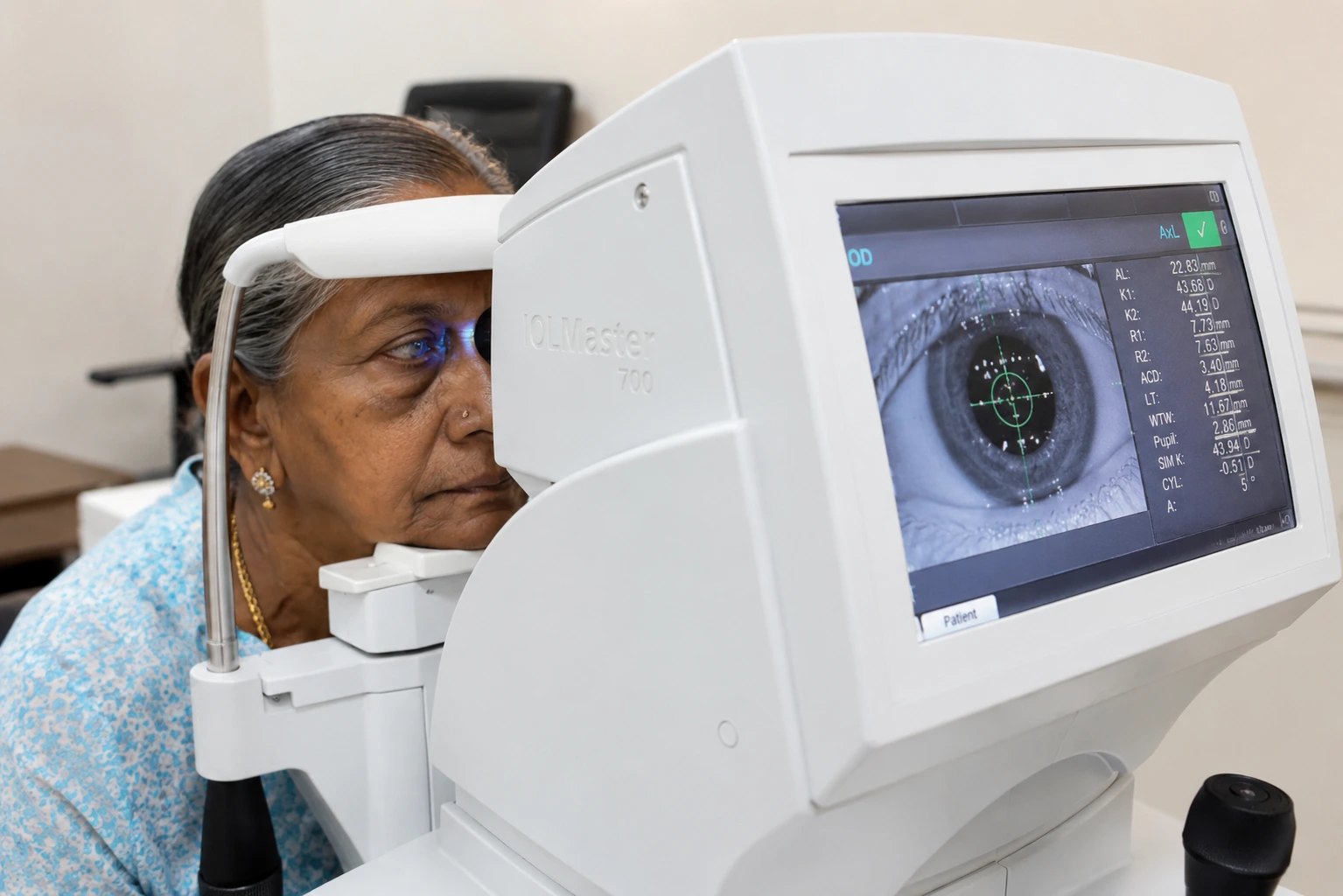
This is one of the most technologically advanced parts of the pre-surgical process. Using devices such as optical biometers, the clinical team measures:●The axial length of the eye
●Corneal curvature (keratometry)
●Anterior chamber depth
These measurements are fed into specialized formulas to calculate the exact power of the intraocular lens (IOL) that will replace the cloudy natural lens. Precision here directly determines whether you’ll need glasses after surgery and how sharp your resulting vision will be.
Step 6: Corneal Topography and Tear Film Assessment
Corneal topography maps the surface curvature of the cornea, helping detect irregularities like astigmatism that may require a toric lens or additional correction during surgery. A tear film assessment checks for dry eye disease, which is common in older adults and can affect both the surgery’s success and post-operative comfort.Step 7: Intraocular Pressure (IOP) Measurement
Elevated intraocular pressure could indicate glaucoma, a condition that needs to be managed carefully alongside cataract surgery. Tonometry, a quick and painless test, measures the pressure inside the eye and helps the surgical team plan accordingly.Step 8: Systemic Health Screening
Since cataract surgery, though localized to the eye, still involves anesthesia and a surgical environment, patients are often screened for:●Blood pressure and blood sugar levels
●Cardiac fitness, especially in elderly patients
●Any active infections
Patients with uncontrolled diabetes or hypertension may be advised to stabilize these conditions before proceeding, as they can increase the risk of complications like delayed healing or infection.
Step 9: Discussion of Lens Options and Surgical Plan
Once all diagnostic data is collected, the ophthalmologist discusses the findings with the patient. This includes:●The type of intraocular lens best suited to their lifestyle (monofocal, multifocal, or toric lenses)
●Expected visual outcomes
●Anesthesia type (usually topical or local)
●Post-operative care instructions
This is the stage where patients can ask questions and voice any concerns about the procedure.
Step 10: Final Pre-Operative Checklist
On the day of or just before surgery, a final round of checks ensures everything is in order:●Confirmation of the correct eye to be operated on
●Verification of the IOL power and type
●Review of fasting instructions, if general sedation is planned
●Final consent form signing
This last safety layer significantly reduces the chances of surgical errors and ensures the patient is fully informed and prepared.
Choosing the Right Team for Your Safety Check
The thoroughness of a pre-surgical safety check often depends on the expertise and equipment available at the clinic you choose. At Axis Eye Clinic, patients undergo a comprehensive, technology-driven evaluation supervised by experienced specialists to ensure the highest standards of surgical safety. Led by Dr. Ramesh Murthy, the clinical team focuses on personalized assessments rather than one-size-fits-all protocols, ensuring that every patient’s unique eye health needs are addressed before surgery.If you’re searching for the Best Eye Clinic in Pune, it’s worth prioritizing centers that emphasize detailed diagnostics over rushed consultations. A safe cataract surgery outcome begins long before the operating table — it begins with an accurate, unhurried safety check.
For those researching the Best Eye Specialist in Pune, look for a doctor who takes time to explain each diagnostic step, answers your questions patiently, and involves you in decisions about lens selection and surgical planning.
How Long Does the Pre-Surgical Check Take?
Most comprehensive evaluations take between 60 to 90 minutes, depending on the number of tests required and whether pupil dilation is involved (which can take 20–30 minutes to take effect). Patients with additional health conditions may need extra time for systemic screening or specialist referrals.What Should You Bring to Your Appointment?
●A list of current medications●Previous eye reports or prescriptions, if any
●Details of past surgeries or hospitalizations
●Someone to accompany you, since your vision may be blurry after pupil dilation
Frequently Asked Questions
Q1. Is the pre-surgical cataract safety check painful?
No. All tests are non-invasive and painless. Some, like tonometry or dilation, may cause mild, temporary discomfort or light sensitivity, but nothing that lasts beyond a few hours.Q2. Can I drive myself home after the check-up?
It’s not recommended. Pupil dilation temporarily blurs vision and increases light sensitivity, so arranging transport is advisable.Q3. What happens if the safety check reveals another eye condition?
If conditions like glaucoma or retinal disease are found, your surgeon will discuss a modified treatment plan, which may include managing the condition before or alongside cataract surgery.Q4. How soon after the safety check can surgery be scheduled?
In most cases, surgery can be scheduled within a few days to a couple of weeks, depending on test results and the patient’s overall health readiness.Q5. Do I need to stop any medications before the check-up?
Only if instructed by your doctor, particularly regarding blood thinners. Always disclose your full medication list during the consultation.Q6. Will I need glasses after cataract surgery?
This depends on the type of intraocular lens chosen during your consultation. Premium lenses can reduce or eliminate the need for glasses for most distances.Take the First Step Toward Safer Vision
A pre-surgical cataract safety check isn’t just a formality — it’s the foundation of a safe, successful surgery and long-term visual clarity. Choosing an experienced team that prioritizes detailed diagnostics can make all the difference in your surgical outcome and recovery experience.If you’re looking for the Best Cataract Surgeon in Pune, trust a clinic that combines advanced diagnostic technology with genuine patient care. Whether you’re exploring options as an Eye Clinic Near Me or comparing the Best Ophthalmologists Near Me in Pune, don’t compromise on the quality of your pre-surgical evaluation.
Among the Best Cataract Surgery Doctors in Pune, those who dedicate adequate time to pre-operative assessment consistently deliver better patient satisfaction and visual outcomes. So, before you commit to a surgery date, ensure your chosen clinic follows a rigorous, patient-centered safety protocol.
Ready to schedule your comprehensive cataract evaluation? Book a consultation today and take the first confident step toward clearer vision. If you’ve been searching for a trusted Cataract surgeon near me, our team is here to guide you through every stage — from your first eye check to full post-surgical recovery — with expertise, transparency, and care.