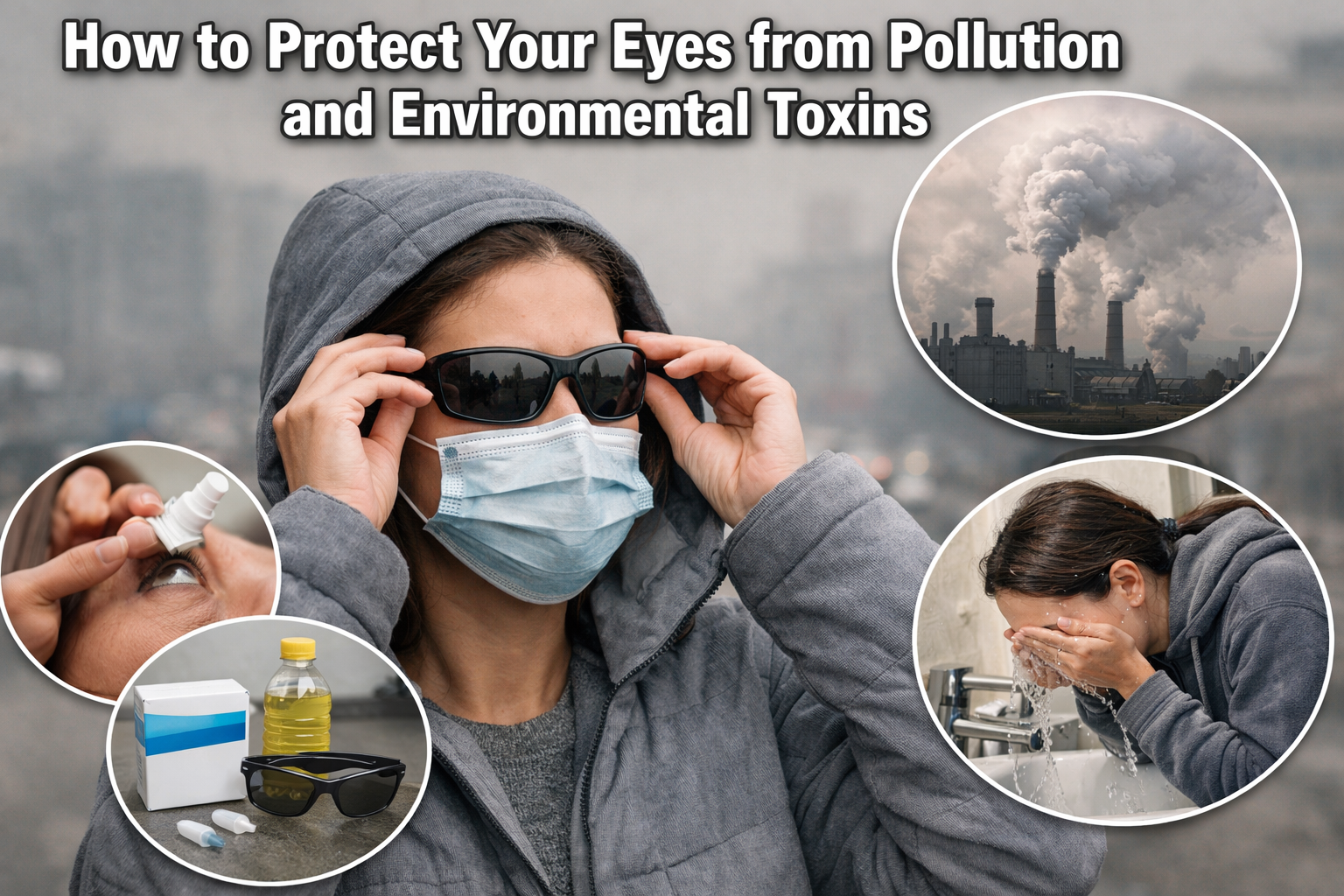
Air pollution, dust, smoke, chemicals, and environmental toxins have become unavoidable parts of modern life—especially in urban areas. While we often focus on protecting our lungs and skin, eye health is frequently overlooked. Constant exposure to pollutants can lead to dryness, irritation, infections, allergies, and even long-term vision problems.
This guide explains how pollution affects your eyes, simple daily habits to protect them, and when to seek professional care from trusted experts like Dr. Ramesh Murthy at Axis Eye Clinic.
• Vehicle exhaust and industrial smoke
• Dust, pollen, and construction debris
• Chemical fumes and indoor air pollution
• Prolonged screen exposure combined with poor air quality
These irritants can damage the tear film, inflame eye tissues, and increase the risk of infections.
• Dry eye syndrome
• Redness, itching, and burning sensation
• Allergic conjunctivitis
• Increased sensitivity to light
• Worsening of existing eye conditions
Consulting a qualified ophthalmologist ensures early detection and prevention of serious complications.
Using sunglasses with UV protection and wraparound designs helps shield eyes from dust, smoke, and harmful ultraviolet rays.
Avoid Touching or Rubbing Your Eyes
Polluted hands can transfer harmful microbes to the eyes. Always wash your hands before touching your face.
Rinse Eyes After Outdoor Exposure
Gently washing your eyes with clean water after returning home helps remove dust and pollutants.
Keeping eyelids and lashes clean reduces the buildup of allergens and bacteria.
Use Lubricating Eye Drops
Preservative-free artificial tears help flush out irritants and keep the eyes moist, especially in dry or polluted air.
Improve Indoor Air Quality
Using air purifiers, maintaining ventilation, and avoiding indoor smoking significantly reduce eye irritation.
• Vitamin A (carrots, leafy greens)
• Omega-3 fatty acids (nuts, seeds, fish)
• Antioxidants (fruits and vegetables)
These nutrients help protect the eyes from oxidative damage caused by toxins.
• Persistent redness or pain
• Blurred or reduced vision
• Excessive watering or discharge
• Frequent eye infections
Timely consultation with the Best Eye Specialist in Pune can prevent long-term damage and ensure appropriate treatment.
Patients searching for the Best Ophthalmologists Near Me in Pune benefit from comprehensive eye evaluations and evidence-based treatment plans.
• Experienced ophthalmologists
• Modern diagnostic equipment
• High hygiene standards
• Transparent consultation and treatment plans
Expert guidance and preventive care play a crucial role in maintaining lifelong vision health.
This guide explains how pollution affects your eyes, simple daily habits to protect them, and when to seek professional care from trusted experts like Dr. Ramesh Murthy at Axis Eye Clinic.
How Pollution and Environmental Toxins Affect Eye Health
Common Sources of Eye Irritants
Environmental toxins that affect eye health include:• Vehicle exhaust and industrial smoke
• Dust, pollen, and construction debris
• Chemical fumes and indoor air pollution
• Prolonged screen exposure combined with poor air quality
These irritants can damage the tear film, inflame eye tissues, and increase the risk of infections.
Eye Problems Caused by Pollution
Long-term exposure may lead to:• Dry eye syndrome
• Redness, itching, and burning sensation
• Allergic conjunctivitis
• Increased sensitivity to light
• Worsening of existing eye conditions
Consulting a qualified ophthalmologist ensures early detection and prevention of serious complications.
Daily Habits to Protect Your Eyes from Pollution
Wear Protective Eyewear OutdoorsUsing sunglasses with UV protection and wraparound designs helps shield eyes from dust, smoke, and harmful ultraviolet rays.
Avoid Touching or Rubbing Your Eyes
Polluted hands can transfer harmful microbes to the eyes. Always wash your hands before touching your face.
Rinse Eyes After Outdoor Exposure
Gently washing your eyes with clean water after returning home helps remove dust and pollutants.
Importance of Eye Hygiene in Polluted Environments
Maintain Proper Eye CleanlinessKeeping eyelids and lashes clean reduces the buildup of allergens and bacteria.
Use Lubricating Eye Drops
Preservative-free artificial tears help flush out irritants and keep the eyes moist, especially in dry or polluted air.
Improve Indoor Air Quality
Using air purifiers, maintaining ventilation, and avoiding indoor smoking significantly reduce eye irritation.
Nutrition and Lifestyle Tips for Stronger Eyes
Eat Eye-Friendly Foods
Include foods rich in:• Vitamin A (carrots, leafy greens)
• Omega-3 fatty acids (nuts, seeds, fish)
• Antioxidants (fruits and vegetables)
These nutrients help protect the eyes from oxidative damage caused by toxins.
Stay Hydrated
Adequate hydration supports tear production and reduces dryness.Take Regular Screen Breaks
Digital eye strain worsens the impact of pollution. Follow the 20-20-20 rule to relax your eyes.When Should You Visit an Eye Specialist?
Warning Signs You Shouldn’t Ignore
Seek medical advice if you experience:• Persistent redness or pain
• Blurred or reduced vision
• Excessive watering or discharge
• Frequent eye infections
Timely consultation with the Best Eye Specialist in Pune can prevent long-term damage and ensure appropriate treatment.
Why Expert Eye Care Matters
Choosing a reputed clinic ensures access to advanced diagnostics, personalized care, and experienced professionals. Axis Eye Clinic, led by Dr. Ramesh Murthy, focuses on preventive eye care as well as advanced treatment for pollution-related eye conditions.Patients searching for the Best Ophthalmologists Near Me in Pune benefit from comprehensive eye evaluations and evidence-based treatment plans.
Specialized Care for Long-Term Eye Health
Preventing Cataracts and Age-Related Conditions
Environmental toxins can accelerate eye aging. Regular check-ups at the Best Eye Hospital in Pune help monitor eye health and detect early signs of cataracts or retinal issues.Advanced Surgical Expertise
For patients requiring surgical intervention, consulting the Best Cataract Surgeon in Pune ensures safety, precision, and faster recovery.How to Choose the Right Eye Clinic
If you’re searching for an Eye Clinic Near Me, look for:• Experienced ophthalmologists
• Modern diagnostic equipment
• High hygiene standards
• Transparent consultation and treatment plans
Expert guidance and preventive care play a crucial role in maintaining lifelong vision health.